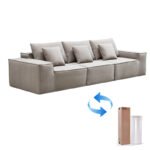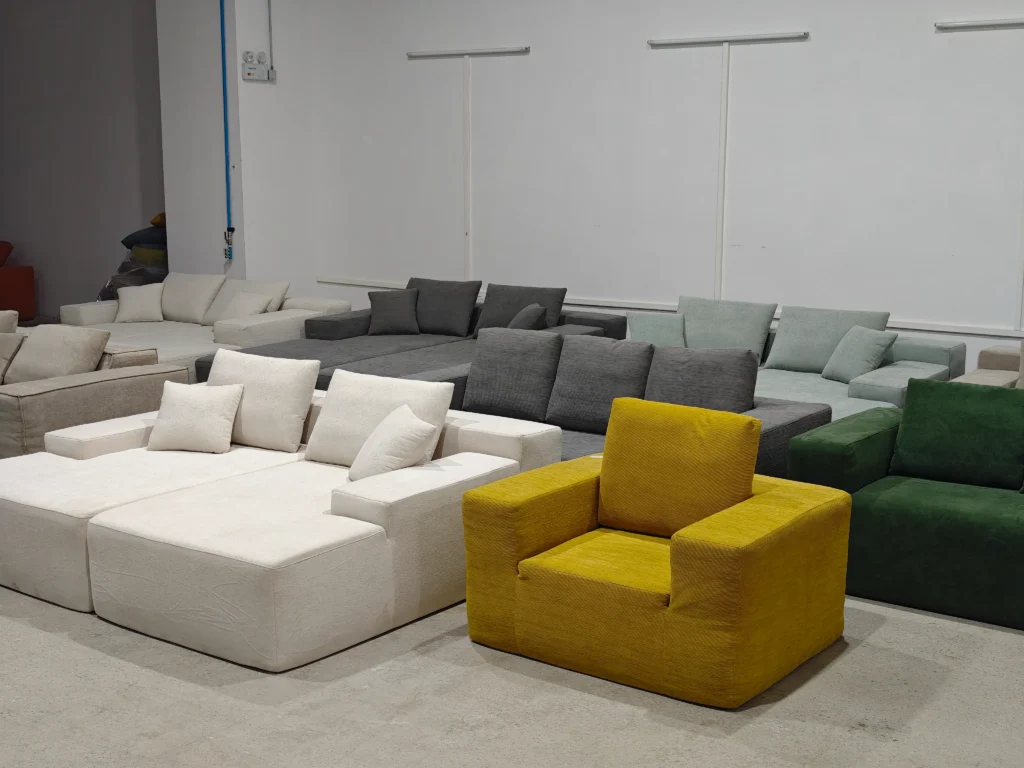
Compressed sofas aren’t just a product trend — they’re a complete business transformation opportunity. In 2025, as the global furniture market seeks better shipping methods, more flexible living solutions, and smarter designs, compressed sofas have emerged as the most strategic product category for manufacturers, wholesalers, and online retailers.
From Compress Sofas‘s daily experience with global customers, I’ve seen firsthand how compressed sofas are rewriting the rules of furniture manufacturing, shipping, and selling.
The $100 Billion Question: What’s Driving the Shift?
The global home furniture industry is worth over USD 700 billion and growing steadily. But traditional furniture logistics, slow delivery, and rising customer expectations are pushing the industry to evolve.
In this context, compressed sofas stand out. They solve major pain points for everyone in the supply chain:
-
Factories: Save space, reduce packaging and labor costs.
-
Distributors: Optimize shipping containers, reduce damages.
-
Retailers: Sell online, ship faster, reduce return costs.
-
Customers: Easy setup, affordable shipping, modern design.
This level of value integration is rare. And in 2025, it puts compressed sofas in the spotlight.

What Makes Compressed Sofas a Game-Changer?
Let’s break down why compressed sofas are more than just a smart product — they’re a scalable business opportunity.
✅ Space-saving engineering
Compressed sofas are vacuum‑sealed or roll‑packed to reduce shipping volume by 60–80%, making them easier and cheaper to transport.
✅ Optimized for online sales
Unlike traditional sofas, compressed sofas fit standard courier boxes. That makes them ideal for e‑commerce, dropshipping, and direct‑to‑consumer logistics.
✅ Cost-efficient across the chain
Lower packaging, warehousing, and freight costs benefit everyone from factory to final customer.
✅ Customer-friendly
Modern designs, simple installation, and quick delivery improve satisfaction and reduce returns.
At Compress Sofas, we design our products specifically for this kind of performance — without compromising on comfort or aesthetics.
Table: Traditional Sofa vs. Compressed Sofa
| Feature | Traditional Sofa | Compressed Sofa |
|---|---|---|
| Shipping Volume | 1.5–3.0 CBM | 0.4–0.9 CBM |
| Packaging Method | Bulk wrapped or crated | Roll pack / Vacuum sealed |
| Assembly | Usually assembled | Minimal assembly or self-expand |
| Delivery Type | Freight / special delivery | Courier / standard logistics |
| Return Handling | Expensive & complex | Lower cost, easy packaging |
| Ideal for E-commerce? | ❌ Rarely | ✅ Perfect fit |
This comparison shows why compressed sofas have structural advantages in modern supply chains.
The Top Five Opportunities in 2025

1. E-commerce Expansion: A Perfect Fit for Direct-to-Consumer
Selling sofas online has always been tricky — until now. Bulky, expensive-to-ship products made logistics slow and costly.
Compressed sofas solve this problem completely.
-
Fast shipping via standard couriers (like UPS, FedEx, local post).
-
Fits Amazon, Shopify, Walmart, and other online formats.
-
Simplifies customer handling (unbox, wait, sit).
In our experience at Compress Sofas, sellers are scaling their compressed sofa businesses much faster than with bulky furniture SKUs.
2. Smarter Logistics = Higher Profit Margins
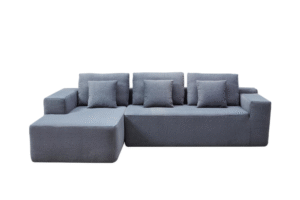
Global freight rates have increased in recent years. Maximizing container space and lowering last-mile delivery cost has become mission-critical.
Compressed sofas allow:
-
More units per container
-
Lower cost per CBM
-
Fewer damaged goods in transit
-
Easy returns and replacements
Especially for cross-border e‑commerce, this can boost profit margins by 20–40%.
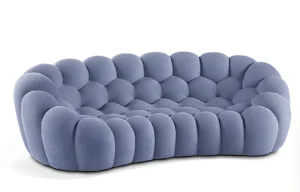
3. Serving the Urban Homeowner
More people than ever live in small spaces, especially in:
-
Urban North America
-
Europe
-
Japan
-
Southeast Asia
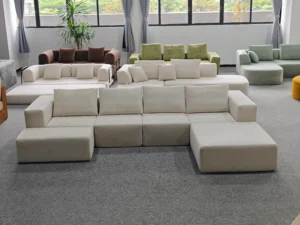
Compressed sofas allow customers to get full-size functionality with a small-apartment footprint — and without needing a freight elevator or professional movers.
Modern families, renters, and first-time homeowners are actively searching for products that combine smart design and space-saving convenience. This is exactly what compressed sofas deliver.
4. Support for Sustainable Business Practices
Consumers in 2025 are very aware of environmental impact. Shipping bulky items creates excess CO₂ and packaging waste.
Compressed sofas help reduce:
-
Packaging materials
-
Carbon footprint in logistics
-
Inventory storage footprint
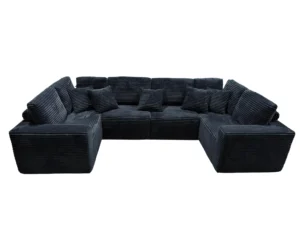
At Compress Sofas, we’ve adopted recyclable materials, flat-pack engineering, and minimalist box packaging that aligns with environmental goals — without raising costs.
This gives brands a clear sustainability edge when marketing to Gen Z and Millennial buyers.
5. Global Demand Surge
Many countries are rapidly increasing imports and demand for compressed sofas, especially:
-
United States
-
Canada
-
Germany
-
United Kingdom
-
Australia
-
South Korea
You can read more about these markets in our dedicated article: Which Countries Are Massively Adopting Compressed Sofas?
These regions are prioritizing:
-
Compact urban furniture
-
Local delivery feasibility
-
Logistics cost reduction
-
Fast online fulfillment
-
Case Study: How One Retailer Doubled ROI with Compressed Sofas
A European client of Compress Sofas transitioned 60% of their sofa inventory to compressed models in Q1 of 2024.
Results:
-
Container loading capacity increased by 55%
-
Warehouse costs dropped by 30%
-
Customer returns decreased by 18%
-
Delivery times shortened by 2–3 days
They’ve since scaled across 3 more EU countries — all thanks to compressed shipping, simplified packaging, and positive buyer feedback.
Where Does This Opportunity Go Next?
Compressed sofas aren’t just about what’s possible today — they are part of a larger shift in the furniture business:
-
Modular furniture that adapts to customer needs
-
Flat-pack innovation that goes beyond IKEA’s model
-
Digitally-native brands relying on easy-to-ship furniture
-
AI-based logistics and fulfillment platforms optimizing CBM use
In other words, compressed sofas represent a pivot point between traditional furniture and the furniture of the future.
How to Get Started: Key Tips for Sellers and Brands
If you want to seize this opportunity in 2025, here’s what we suggest:
-
Audit your logistics: Calculate your current cost per unit per CBM.
-
Test compressed SKUs: Launch a product line using Compress Sofas models.
-
Optimize for unboxing: Include guides, compact tools, and clear setup instructions.
-
Market smartly: Show real-life scenarios (small apartments, fast shipping, young couples).
-
Get feedback fast: Use reviews to refine your next product batch.
Final Thought: This Is More Than a Product Shift
Compressed sofas are a category shift, a logistics breakthrough, and a consumer mindset revolution — all in one.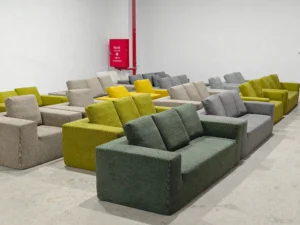
From reducing freight to speeding up e‑commerce, from solving last-mile issues to supporting green strategies, compressed sofas check all the boxes.
This is not a short-term trend.
It’s the future of sofa manufacturing, and it’s already here.
If you’re in furniture and not yet investing in compressed models, 2025 is the year to start.
And if you’re already looking — we at Compress Sofas are here to help you scale it.