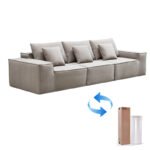
In 2025, the compressed sofa industry is no longer defined solely by novelty or convenience. It is now propelled forward by real technological revolutions that are transforming manufacturing, logistics, customer experience, and sustainability. These innovations are expanding the category from a single product idea into a strategic furniture sector with global impact.
At Compress Sofas, we see these technological shifts unfolding in real time. In this article, I will break down the four major technological revolutions shaping compressed sofas, why they matter, how they work, and what they mean for manufacturers, sellers, and consumers around the world.
Introduction: Why Technology Matters in Compressed Sofas
Compressed sofas are unique because they combine design, engineering, logistics, and user experience into one product. They won’t succeed if any of those elements fail.
In the early years, compressed mattresses led the way by proving that soft goods could be vacuum‑packed without sacrificing comfort. But sofas are more complex: they have frames, cushions, springs, fabrics, and multi‑component assemblies.
That complexity triggered a wave of innovation. What started as a packaging solution has become a multi‑layered technological evolution in 2025.
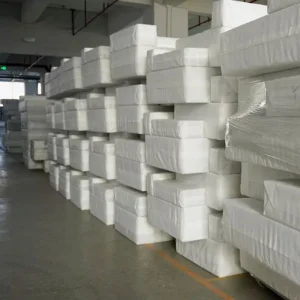
Revolution 1 — Compression Engineering and Material Science
The first major technological revolution is advanced compression engineering combined with new material science. This addresses the core challenge: how do you compress a sofa so it returns to full comfort, shape, and structural integrity?
What Was the Problem?
Traditional sofas are bulky, rigid, and difficult to move. Simply squeezing them into a box causes damage, warping, or unwanted compression memory in cushions and springs. Early compressed furniture attempts often suffered permanent deformation or slow recovery.
How the Revolution Solves This
Modern compressed sofas are engineered from the ground up with compression‑ready frames and materials:
-
Next‑generation foams
Sofas now use engineered foam blends that can withstand extreme compression without cell collapse. These foams have excellent memory recovery. -
Elastic engineering textiles
Fabrics are selected for flexibility and durability under repeated compression cycles. They resist creasing, tearing, and stretching failures. -
Adaptive frame designs
Frames use engineered joints and flexible timber or metal supports that tolerate folding or rolling without structural fatigue.
These breakthroughs allow compressed sofas to be packed down over 60–75% smaller than traditional packaging and still expand reliably.
Revolution 2 — Automated Compression and Packaging Systems
The second revolution is automation in compression and packaging. It’s no longer sufficient to manually compress a sofa and tape it in a box. At scale, this process must be fast, consistent, and safe.
Why Manual Methods Failed
-
Inconsistent compression ratios
-
Labor‑intensive and slow
-
Higher risk of damage
-
Weak packaging seals
What Automation Changed
By 2025, integrated machinery and digital compression workflows have entered mainstream sofa manufacturing.
Key features include:
-
Precision vacuum chambers
Controlled vacuum systems that compress products uniformly. -
Mechanical rollers and frame positioning
Robotic or semi‑automated rolling ensures consistent compactness without harming structural components. -
Quality sensors
Systems that measure compressibility, expansion time, and foam resilience to catch defects before shipping. -
Automated sealing technologies
Air‑lock seals, reinforced films, and smart packaging that adapts to sofa size automatically.
Table: Traditional vs. Automated Compression
| Feature | Traditional Manual Packaging | Automated Compression Systems |
|---|---|---|
| Consistency | Low | High |
| Speed | Slow | Fast |
| Labor Cost | High | Lower (after initial investment) |
| Damage Risk | Higher | Reduced |
| Scalability | Limited | Enterprise‑Level |
| Packaging Control | Variable | Precise |
At Compress Sofas, we’ve seen how automation allows higher throughput without compromising quality — especially for clients who are scaling globally.
Revolution #3 — Logistics Integration and Smart Distribution
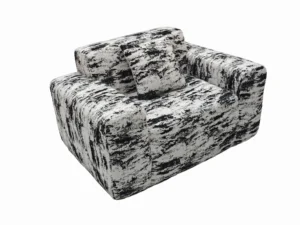
The third technological revolution is in logistics integration. Compressed sofas aren’t just smaller; they are fundamentally more compatible with modern logistics networks.
The Old Logistics Model
Traditional sofas require:
-
Freight shipments
-
White‑glove delivery
-
Multiple handlers
-
Special scheduling
This results in:
-
High delivery costs
-
Long delivery windows
-
Delivery failures
-
Damaged goods
This model made online furniture sales hard.
The New Model Enabled by Compression
Compressed sofas fit into standard parcel systems. This creates new possibilities:
-
Courier compatibility
Models shipped via UPS, FedEx, DHL, and other standard carriers. -
Fulfillment center integration
Compressed inventory can be held in Amazon FBA warehouses, Shopify‑linked 3PL hubs, and regional distribution centers. -
Dynamic routing
Smart distribution uses real‑time data to send orders from the closest location, reducing delivery times and cost. -
Reverse logistics optimization
Easier returns because products can be recompressed and reshipped efficiently.
Logistics Advantage by the Numbers
| Logistics Factor | Traditional Sofa | Compressed Sofa |
|---|---|---|
| Delivery Mode | Freight Only | Freight + Parcel |
| Avg Shipping Cost | High | 40‑60% Lower |
| Return Handling | Complex | Streamlined |
| Warehouse Space Required | Large | Reduced |
| Delivery Time | Days–Weeks | Days |
Smart logistic integration has unlocked profitable e‑commerce models for compressed sofas — and sellers who understand these networks have a big advantage.
Revolution 4 — Digital Experience and Customer Transparency
The fourth revolution is digital technology transforming the customer experience. In 2025, compressed sofas aren’t just shipped differently — buyers interact with them differently.
The Challenge Before Digital Integration
Furniture shopping used to mean:
-
In‑store visits
-
Guessing at dimensions
-
Uncertain delivery
-
Slow setup
This created hesitancy in online furniture purchases.
What Digital Tech Changed
Today’s compressed sofa buyers enjoy:
1. 3D Product Visualization
Customers can view sofas in virtual rooms, rotate models, and see compression boxes before ordering.
2. Augmented Reality (AR) Previews
Users can use mobile AR to “place” the sofa in their living room to check size and fit before buying.
3. Real‑Time Shipping Tracking
Integrated tracking lets buyers see compression unpacking status and expected expansion timelines.
4. Automated Customer Support
AI chat and voice systems answer setup questions, warranty inquiries, and product care guidance.
5. Post‑Purchase Digital Guides
Step‑by‑step videos and interactive tutorials help customers unpack and set up without frustration.
This digital experience increases trust, conversion, and customer satisfaction.
How All Four Revolutions Work Together
These technological revolutions are interlinked, reinforcing each other:
-
Material science enables the product to physically compress and recover.
-
Automated packaging ensures consistency and speed.
-
Logistics systems make delivery efficient and scalable.
-
Digital customer experience closes the gap between online purchase and physical reality.
Without any one of these, the ecosystem is weaker. Together, they form a new industrial paradigm for compressed furniture.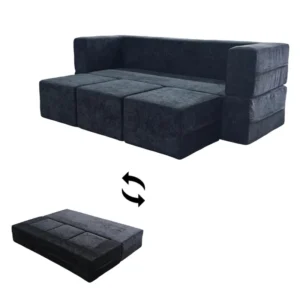
Market Impact: Winners and Growth Areas
These technological changes are driving rapid market shifts:
🚀 Smaller Sellers Gain Reach
Smaller brands can now compete with large manufacturers because compressed products reduce shipping barriers.
📦 Retailers Scale Faster
Retailers can offer same‑day or next‑day delivery in many regions because inventory fits parcel networks.
🌍 Global Demand Grows
Markets previously unreachable due to freight constraints can now be served effectively.
👩💻 Better Online Conversion
Customers who can visualize, track, and confidently order furniture online are now a bigger segment.
Challenges Still Ahead
Even with these revolutions, some challenges remain:
❗ Quality Standards
Not all compressed sofas are engineered equally. Cheap materials still exist in the market.
❗ Logistical Training
Some logistics partners need guidance in handling compressed furniture properly.
❗ Returns Policy Complexity
Standardizing return and repack processes is still evolving.
Each challenge is being tackled through improved technology and education.
The Future: What’s Next After 2025?
Looking ahead, technology will continue to evolve:
AI‑Driven Design
Predictive modeling will shape foam density, frame strength, and comfort profiles using machine learning.
Automated Unboxing Assistance
Smart packaging may guide customers through unpacking with AR or embedded sensors.
Sustainable Compression
New biodegradable materials and reusable compression packaging will reduce environmental impact.
On‑Demand Manufacturing
Compression‑ready production lines may allow customized sofas to be made faster and shipped directly.
These innovations are not distant. They are already in development.
Table: Technology Impact on Compressed Sofa Value Chain
| Component | Traditional Sofa Industry | Compressed Sofa Future (2025) | Impact |
|---|---|---|---|
| Design | Static, heavy | Compression‑ready by default | Higher flexibility |
| Materials | Standard foam/fabric | High‑resilience, flexible blends | Longer life + better recovery |
| Packaging | Manual, bulky | Automated compression system | Cost & time savings |
| Logistics | Freight only | Parcel + smart routing | Lower cost & faster delivery |
| Customer Experience | In‑store essential | Digital preview + AR + support | Higher conversion |
| Returns | Costly, complex | Repackable & tracked | Lower losses |
This table highlights how technology transforms every layer of the compressed sofa value chain compared with legacy processes.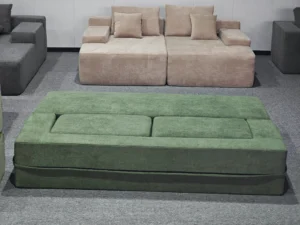
How Sellers and Manufacturers Should Prepare
For businesses looking to benefit from these revolutions:
✔ Invest in Compression‑Ready Design
Work with engineers who understand how foam, frames, and fabrics behave under compression.
✔ Adopt Automated Packaging
High throughput and quality control are essential for consistency.
✔ Integrate with Smart Logistics
Use fulfillment networks that can handle compressed inventory and dynamic routing.
✔ Enhance Digital Presence
Offer 3D models, AR previews, and clear tracking to reduce buyer hesitation.
✔ Educate Your Market
Help customers understand why compressed sofas are comfortable, durable, and convenient.
At Compress Sofas, we assist partners with product selection, tech integration, and go‑to‑market support.
Conclusion: A New Era for Furniture Technology
The compressed sofa industry in 2025 stands at the intersection of material science, automation, logistics, and digital experience. These four technological revolutions have created a new furniture paradigm — one that offers value, convenience, sustainability, and profitability.
From design labs to front‑door delivery, technology has rewritten what is possible in furniture. The result is a category that can scale rapidly, satisfy modern consumer expectations, and open new opportunities for businesses of all sizes.
Whether you are a manufacturer, seller, or online retailer, understanding and adopting these technologies will be crucial to thriving in this era of rapid transformation.
The future of furniture is not just about comfort — it’s about intelligent engineering and connected experiences. And in 2025, compressed sofas stand at the forefront of that revolution.